Industrial Cooling Is Broken: Why "Cooling Vests" and Traditional Heat Protocols Can't Handle Today's Extreme Temperatures
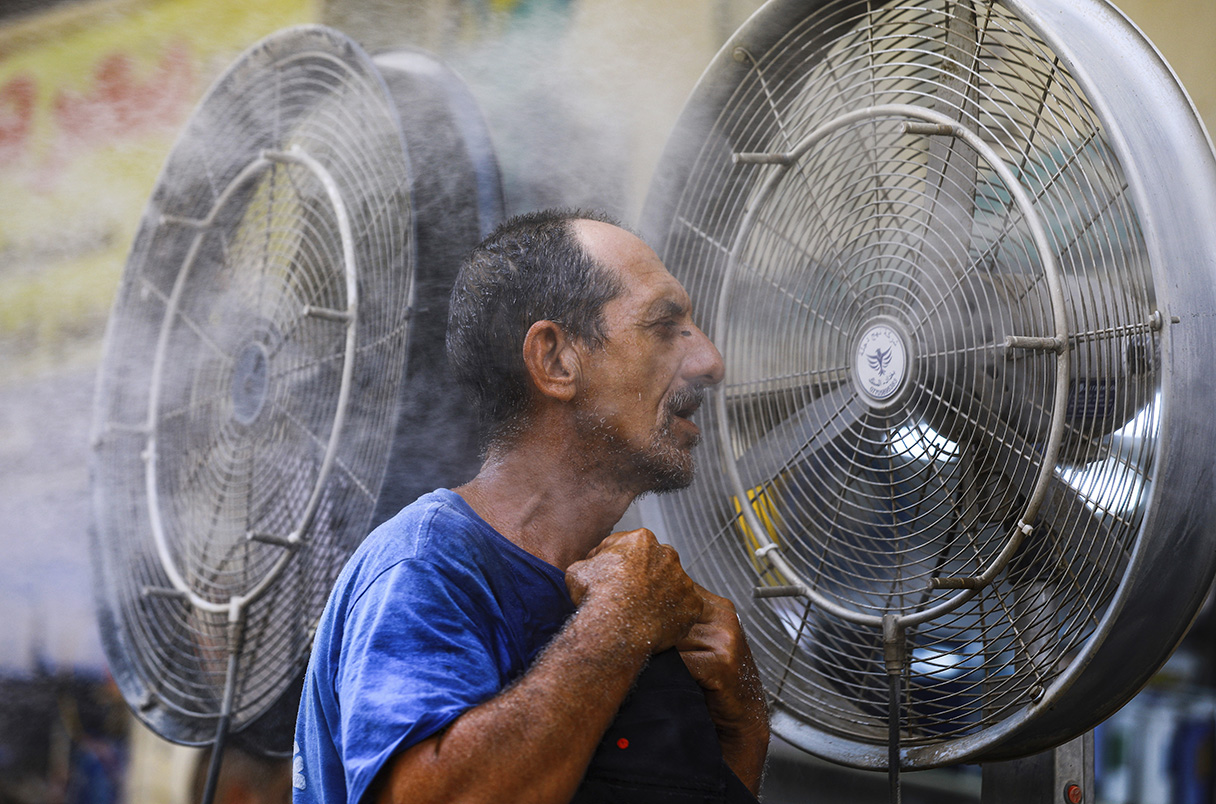
Modern industrial work now faces consistently extreme temperatures that traditional cooling methods cannot address. Personal cooling gear hasn't kept pace either, not in utility yards, not on refinery turnarounds, not in warehouses, not on construction sites. Workers need sustained cooling for full 8–12+ hour shifts, not temporary relief between forced breaks. For the research behind why heat exposure keeps compounding, see why consecutive hot days are more dangerous.
September 2026 update: this article now draws a clearer line between heat-program controls and wearable cooling. Water, shade, rest, acclimatization, and monitoring remain the foundation. A cooling vest is an added engineering control whose value depends on runtime, humidity, PPE compatibility, and adoption. Compare those tradeoffs in the cooling vest guide before selecting equipment.
Key takeaways:
- Ice, evaporative, and phase-change (PCM) vests all fail to cover a full 8-12 hour industrial shift.
- Industrial heat comes from radiant heat off concrete and steel, not just ambient temperature, so environmental cooling alone falls short.
- Cooling gear now needs to be battery-powered, humidity-independent, and PPE-compatible to keep up.
- Active, solid-state cooling is the category built to meet those requirements.
Why environmental cooling alone no longer works
Decades of investment have gone into cooling buildings rather than workers. That approach is now insufficient. Modern industrial spaces (warehouses, refineries, utility work sites) generate heat that bounces off concrete and steel and lingers in difficult-to-reach areas. The solution requires shifting focus toward personal body cooling rather than environmental management.
The problem with classic cooling gear
Common products like ice jackets, evaporative vests, and phase-change packs dominate search results but fail in real industrial conditions. These items are easy to manufacture and easy to market, yet inadequate for sustained heat exposure. Ice melts in 60–90 minutes. Evaporative fabric stops working in humidity. Phase-change packs hold a constant temperature for 2–3 hours, then need re-freezing. None of them cover a full shift. We put the runtime numbers side by side in how long does a cooling vest last, and break down each category in the cooling vest comparison.
What industrial cooling gear needs to do now
A practical decision framework for industrial cooling in 2026, shaped as much by the tightening OSHA heat standard as by the weather:
- Maintain stability for 8–12+ hours
- Use battery power rather than ice or gel packs
- Function in high-humidity environments
- Remain lightweight for mobility under PPE
- Integrate seamlessly with existing PPE (hi-vis, FR, fall-arrest, SCBA)
- Deliver consistent cooling output across the shift
- Encourage actual worker adoption rather than sitting in a locker
Industrial cooling is entering a new phase
Innovation is shifting toward active cooling technology, compact, battery-powered systems that regulate body temperature throughout full shifts in extreme conditions. This is the category that matters now: solid-state, thermoelectric, hot-swap-battery cooling that doesn't depend on ice or water logistics. Our technology page explains how that works in plain English, and the battery-powered cooling vest guide covers what to look for. For what the peer-reviewed evidence actually says about wearable cooling effectiveness, see do wearable cooling devices actually work?
The future of industrial cooling solutions
Next-generation features the industry should expect: extended wear time, lightweight ergonomic design, seamless PPE integration, durability under field conditions, and operation simple enough that supervisors don't have to police usage.
Conclusion
It is time to replace outdated "rest and recover" protocols with full-shift cooling solutions that prioritize worker safety and maintain productivity in heat-stressed environments. The vest in your locker should run longer than your lunch break. If you want to put numbers on what heat is already costing a given crew, the heat-stress ROI calculator models lost hours and incident costs by crew size and climate. Sector-specific breakdowns live on the construction, oil and gas, and utilities pages.
FAQ
Why do ice and evaporative cooling vests fail in industrial settings?
What does industrial cooling gear need to do to cover a full shift?
Is environmental cooling like fans and AC enough for industrial heat?
What is active cooling and how is it different from ice or PCM vests?
Compare cooling vest types → and How long does a cooling vest last? →