Why Manufacturing Floors Are Getting Hotter, and What Safety Leaders Can Actually Do About It
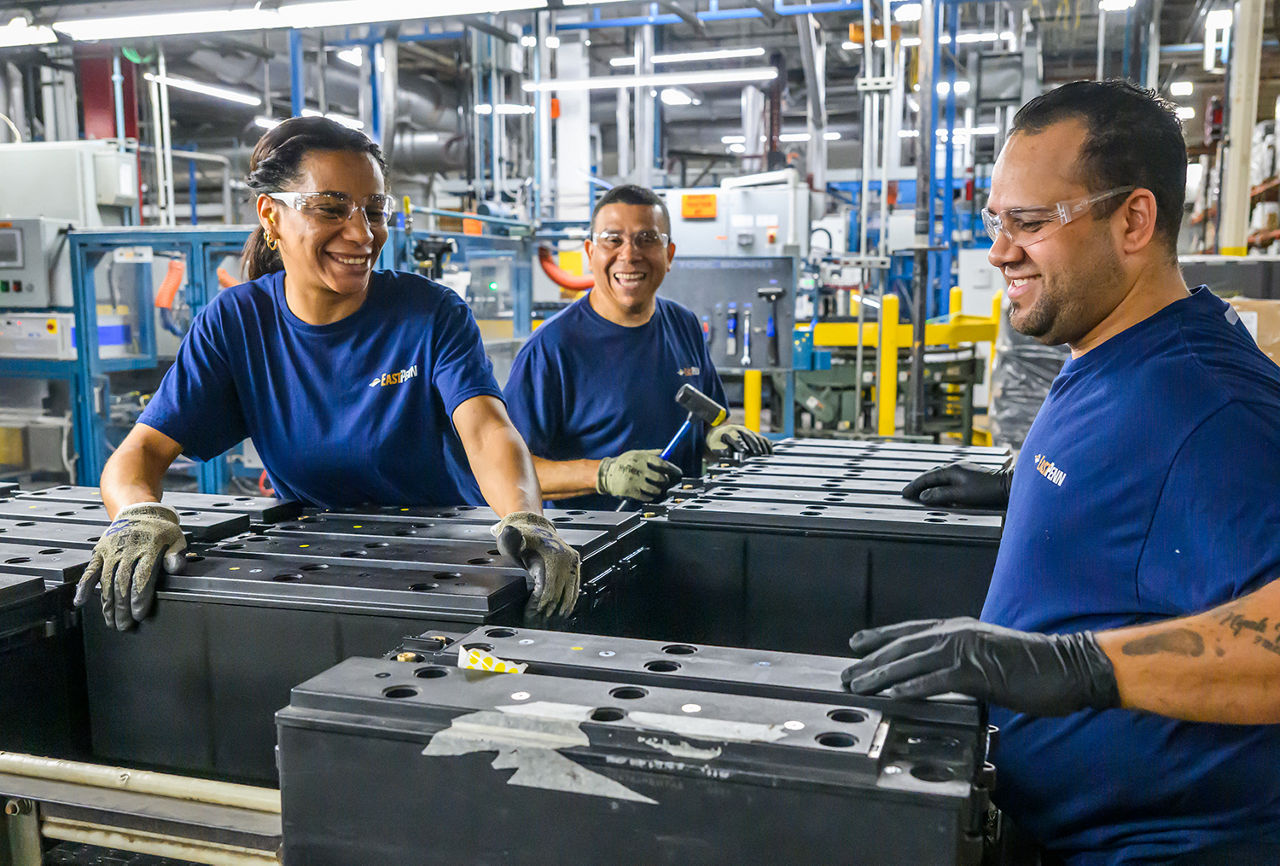
Manufacturing facilities in hot climates routinely run indoor temperatures that exceed outdoor conditions. One Houston EHS director reported plants hitting mid-90s indoors before lunch even with outside temperatures only in the high 80s. Metal-processing floors can see temperature spikes of 30–40°F above ambient during peak operations.
September 2026 update: start with a floor map, not a product list. Record heat index or WBGT by zone, task, and shift, then overlay radiant sources, PPE, recovery areas, and incident patterns. That baseline shows whether the first control belongs at the process, the building, the schedule, or the worker. Use the manufacturing heat guide and the WBGT definition when structuring the assessment.
Key takeaways:
- Manufacturing buildings trap heat like greenhouses, so indoor temperatures can exceed outdoor conditions by mid-morning.
- Standard interventions, fans, cooling rooms, ice vests, hydration stations, fall short on a real hot-work floor.
- Progressive EHS teams treat floor heat as an operational risk and map hotspots rather than relying on facility-wide HVAC.
- Active, battery-powered cooling is emerging as the technology that works in high humidity without ice.
The root causes
Industrial buildings function like greenhouses, trapping air and heat. Overhead doors constantly exchange warm air with hotter, more humid outside air. Machinery generates persistent radiant and convective heat that lingers long after shutdown. High-mass surfaces like concrete and steel store and slowly release heat throughout the day, preventing overnight resets. Rising Gulf Coast humidity prevents effective sweat evaporation, a physiological process that simply stops working under extreme conditions. This is why wet bulb globe temperature rather than the thermostat reading is the number that tracks real risk on a plant floor. See the manufacturing heat-stress page for how this plays out by process type.
The economic impact
Heat-related labor disruptions cost the United States roughly $100 billion annually, with manufacturing bearing a disproportionate share. Production slows as workers take frequent breaks. Management redistributes tasks to prevent heat illness. New-employee onboarding stretches longer. Experienced workers show early heat-stress indicators such as headaches, dizziness, and reduced concentration, often preceding recordable incidents. Supply chain delays compound across months. To size the exposure for your own floor, the heat-stress ROI calculator converts crew size, shift length, and climate into lost hours and incident cost.
Why conventional solutions fall short
Standard interventions prove insufficient on a real hot-work floor:
- Fans become ineffective when humidity undermines evaporation, and pose safety risks near particulate processes.
- Cooling rooms offer temporary relief but reduce productive labor time and disrupt workflow rhythm.
- Ice-based cooling vests warm quickly and add unwelcome weight. See ice vests versus active cooling for the runtime gap.
- Hydration stations address dehydration but cannot lower core body temperature.
- Administrative controls, worker rotation, shift restructuring, reduced hot-zone time, typically decrease output by double-digit percentages during peak heat days.
Progressive EHS approaches
Forward-thinking safety teams treat heat as an operational risk comparable to chemical handling or lockout-tagout procedures. Their strategies include:
- Mapping floor temperatures to identify hotspots beyond standard HVAC plans
- Training supervisors to recognize early behavioral heat-strain indicators
- Standardizing multi-site heat response protocols against the federal OSHA heat triggers and any applicable state rule
- Piloting new cooling equipment and gathering worker feedback before large-scale deployment
Emerging technology solutions
Next-generation active cooling systems, thermoelectric modules, micro-loop water circulation, and high-density battery systems, address the limitations of traditional PPE. These systems operate effectively in high humidity without ice, and integrate with standard PPE without cords, hoses, or bulky housings that impede movement or create machinery hazards. For what the peer-reviewed evidence says about wearable cooling effectiveness, see do wearable cooling devices actually work?
Building-specific strategies
Effective heat management begins with understanding facility thermal patterns throughout the day. Temperature varies hourly across different zones. Western building sections may be tolerable in the morning but unbearable by afternoon. Mezzanines above production lines accumulate heat undetected by floor-level sensors. Targeted airflow around specific machines can lower surrounding temperatures several degrees, materially reducing physiological stress. Equipment repositioning or radiant barriers sometimes outperform facility-wide cooling. Pilot programs with small worker groups (5–10 people) provide adequate data on physiological performance and worker acceptance before scaling.
Conclusion
Manufacturing floors face rising heat from irreversible factors: shifting climate patterns, increasing machinery loads, and buildings designed for outdated thermal conditions. Successful companies will treat heat as an operational variable, invest in environmentally-matched solutions, and redesign workflows that maintain worker health without sacrificing output.
FAQ
Why are manufacturing floors hotter than the temperature outside?
Why don't fans and cooling rooms solve heat on a manufacturing floor?
What are progressive EHS teams doing about manufacturing floor heat?
What cooling technology works on a hot manufacturing floor?
See the full cooling vest guide for manufacturing → and Compare cooling vest types →