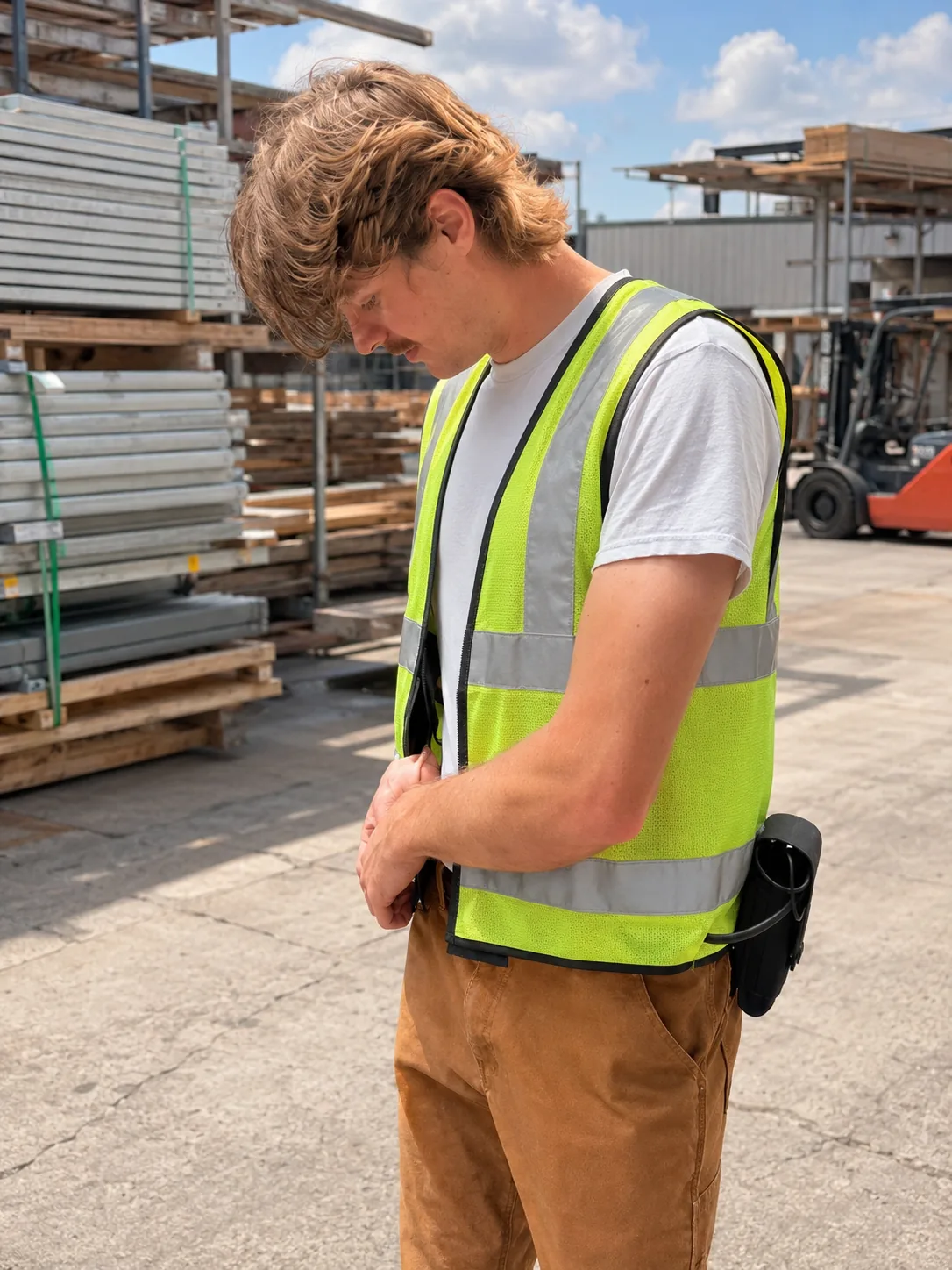
Do Cooling Vests Work for Construction Workers? A New Study Puts Them to the Test
Yes, with limits. A cooling vest changed one physiological signal in a new construction-worker study. It did not change the other. That makes the paper useful, especially if you read past the headline.
Published September 11, 2026, the study is unusually timely. Heat programs are moving from checklists toward field data, and safety teams are being asked whether personal cooling gear earns a place beside water, shade, acclimatization, and work-rest controls. The new result offers a cautious yes. It does not offer a blank check.
What this review covers. We read the new construction study, a 2026 meta-analysis of 69 wearable-cooling studies, and current OSHA and NIOSH heat guidance. The practical pilot plan below is our interpretation of that evidence. It is not a claim that one vest or one study solves occupational heat.
The new study, at a glance
12
Construction workers enrolled in the prospective crossover study
2 days
One cooling-vest day and one comparison day for each participant
BR
Breathing rate was significantly lower with the vest
HRV
Heart-rate variability did not improve significantly
The result in one sentence
The vest lowered breathing rate, with the clearest difference during the first 10 to 20 minutes, but the study did not find a significant change in heart-rate variability.
What the researchers actually did
The paper, published in the Journal of Occupational and Environmental Medicine, followed 12 construction workers in a prospective pragmatic crossover. Each worker completed two study days. That design matters: every participant served as his or her own comparison, which helps reduce some of the noise caused by differences in age, fitness, acclimatization, or baseline physiology.
The researchers tracked breathing rate and heart-rate variability. Breathing rate can rise as physical and thermal strain climb. Heart-rate variability looks at the timing between beats and is sometimes used to assess autonomic strain and recovery. The cooling-vest condition produced a significant reduction in breathing rate overall, with the strongest differences early in the observation window. The HRV result was not statistically significant.
That is the whole result. The study did not report a proven reduction in heat illness, injuries, lost time, core temperature, or full-shift productivity. It also did not compare every cooling mechanism on the market. A 12-person, two-day study cannot answer those questions.
Why a small study is still worth reading
Small field studies are common in occupational heat research because construction work is difficult to standardize. Tasks change. Sun, wind, humidity, clothing, pace, and crew experience all move at once. A controlled chamber produces cleaner data, but a jobsite exposes the practical problems that a chamber removes.
The crossover design is a sensible response to that messiness. It does not make 12 people a large sample. It does make the comparison more informative than a simple survey asking workers whether they felt cooler.
The early breathing-rate difference raises another useful question: did the system's cooling output fade, did the work change, or did the body adapt over time? The abstract cannot settle that. For a buyer, though, it points straight at runtime. A vest that performs for 20 minutes and a vest that performs through the hottest four hours are different tools, even if both feel cold at the start.
How it fits the wider 2026 evidence
A separate meta-analysis published in April 2026 pooled 69 wearable-cooling studies. Across that larger set, cooling interventions were associated with average reductions of 0.24°C in rectal temperature, 0.26°C in gastrointestinal temperature, 1.14°C in skin temperature, and 7.69 beats per minute in heart rate.
Those averages look precise. The evidence beneath them was not. The authors rated certainty from low to very low and found high variation among study methods, cooling technologies, work protocols, and environments. In plain terms, wearable cooling often moves physiological measurements in the right direction, but the size and durability of the benefit are hard to predict from a category label alone.
This is consistent with our earlier review of whether wearable cooling devices work. The mechanism, heat exposure, humidity, garment bulk, reset process, and time on task can change the outcome. A procurement sheet that says only "cooling vest" leaves out most of what determines performance.
PPE changes the heat calculation
NIOSH updated its PPE heat-burden guidance in July 2026. The agency notes that protective clothing can reduce sweat evaporation, trap heat and moisture, add weight, and increase the energy required to do the work. It lists cooling vests and water- or air-cooled garments as personal cooling options, while warning that some systems are heavy, cumbersome, tethered, or too short-lived for the task.
OSHA's heat guidance handles clothing as a number. Safety teams are instructed to add a clothing adjustment factor to measured Wet Bulb Globe Temperature, or WBGT. Standard work clothes add nothing. Double-layer woven clothing adds 3°C, and limited-use vapor-barrier coveralls add 11°C. That adjusted figure, paired with workload and acclimatization, is the relevant exposure estimate.
This changes how a cooling-vest pilot should be judged. If a vest adds insulation, bulk, or task effort, the test has to capture that cost along with the cooling. The correct question is not whether the fabric feels cold in the trailer. It is whether the complete system lowers strain while the worker performs the actual job in the actual PPE stack.
How to run a site pilot that produces an answer
A vendor demo can show that a device turns on. A site pilot should tell you whether it belongs in your heat program. Use a written protocol and keep it simple enough for supervisors to run.
Define the decision first. Decide whether the pilot is testing heat strain, comfort, PPE compatibility, break recovery, task output, or full-shift use. One pilot does not need to answer every question.
Record effective WBGT. Measure conditions at the work area, then apply OSHA's clothing adjustment for the PPE being worn. Log workload, shade, wind, and acclimatization status too.
Use matched days or a crossover. Have the same workers perform comparable tasks with and without the vest. Alternate the order when possible so the hottest day does not automatically favor one condition.
Track operation, not feelings alone. Record start time, battery or pack changes, resets, failures, fit complaints, interference with harnesses, and the share of the scheduled period the vest was actually worn.
Use a short set of worker measures. Thermal sensation, perceived exertion, symptoms, breaks, task interruptions, and simple output measures are more useful than a long survey nobody completes.
Keep the heat plan intact. Water, shade, acclimatization, work-rest schedules, buddy checks, stop rules, and emergency response remain in force. The pilot is not permission to extend exposure.
Set the pass line before the test. Write down the minimum runtime, adoption rate, PPE fit, and measured benefit required to continue. Otherwise a memorable cold sensation can outweigh the rest of the data.
What to carry into procurement
Ask for performance over time, under your PPE, at your workload and effective WBGT. A peak cooling number without duration and test conditions is not enough to compare products.
What this means for construction heat programs
The new study adds another positive signal for personal cooling, but it also shows why broad claims are premature. One outcome improved. One did not. The sample was small. The observation was short.
The larger research base points in the same general direction with wider uncertainty. Cooling vests can reduce physiological strain. Their real value depends on whether they keep working, fit the PPE stack, survive the site, and get worn. Those are engineering and operations questions as much as medical ones.
For teams evaluating equipment now, compare the major cooling vest technologies, then build a pilot around your hottest representative task. Crews doing rebar, roofing, concrete, or enclosed fit-out work do not have the same exposure profile. The crew buying guide covers the practical inputs to collect before requesting samples.
OSHA and NIOSH are clear on the larger point. Personal cooling sits inside a heat program. It does not replace exposure controls. The best use of this study is to justify a careful field test, not to skip the rest of the plan.
Frequently asked questions
What did the 2026 construction cooling vest study find?
The 12-person, two-day crossover study found a significantly lower breathing rate when workers wore cooling vests, especially during the first 10 to 20 minutes. It did not find a significant improvement in heart-rate variability.
Was the study large enough to prove that cooling vests prevent heat illness?
No. The study was small and measured narrow physiological outcomes over two days. It supports further field use and testing, but it did not establish reductions in heat illness, injuries, lost time, or full-shift heat strain.
What does the wider cooling vest evidence show?
A 2026 meta-analysis of 69 studies reported average reductions in rectal temperature, gastrointestinal temperature, skin temperature, and heart rate. The authors rated the certainty of evidence low to very low because methods and results varied widely.
How should a construction company test cooling vests?
Start with a defined decision, matched workdays, effective WBGT, workload and PPE records, a crossover design, and simple operational measures such as runtime, swaps, worker use, symptoms, breaks, and task output. Keep heat-plan stop rules in force throughout the pilot.
Do cooling vests replace water, rest, acclimatization, or engineering controls?
No. OSHA and NIOSH treat personal cooling as one part of a heat program. Environmental controls, hydration, acclimatization, work-rest schedules, training, and emergency response still apply.
Sources
Prospective crossover study. “The Effectiveness of Cooling Vests in Reducing Physiological Strains of Occupational Heat Stress Among Construction Workers.” Journal of Occupational and Environmental Medicine, 2026. PubMed record.
Systematic review and meta-analysis. “Occupational heat stress and the role of wearable cooling interventions.” 2026. PubMed record.
CDC/NIOSH. “PPE Heat Burden.” Updated July 15, 2026. Read the guidance.
Occupational Safety and Health Administration. “Heat Hazard Recognition.” Clothing adjustment factors and effective WBGT. Read the guidance.
About the author
Clema Research reviews occupational heat studies and guidance for safety leaders evaluating personal cooling. We separate reported results from our interpretation and link the primary sources so readers can check the evidence directly.