How do you keep workers cool in a hot data center?
Work the controls in order, because the cheap ones come first. Close the containment: missing blanking panels and unsealed floor cutouts let hot exhaust recirculate, which makes both aisles worse and costs nothing to fix. Do the task from the cold side where it is possible. Rotate people out of the hot aisle on a clock rather than on how they feel. Give them a genuinely cool space to go to, which a warm NOC is not. Keep water within reach of the work. Personal cooling is the last rung, not the first, and in a data hall it has to run dry because ice and evaporative gear bring water near energized equipment.
Why can't you just use fans to cool workers in a data hall?
Two reasons. OSHA's own guidance says air movement helps only while the air is cooler than skin, usually below 95 degrees F dry bulb, and a hot aisle is above that, so a fan is moving hot air across a hot person. The second reason is specific to this building: a fan or a propped containment door disrupts the airflow design, degrades cooling for the whole rack line, and the facility team will shut it down. Spot coolers have the same problem in reverse, because they reject their heat into the room and into the building's cooling load.
What do you do when a worker overheats in a data center?
Work out which of two things you are looking at. Heat exhaustion shows as fatigue, irritability, thirst, nausea, dizziness, heavy sweating and a raised temperature or fast heart rate: move them somewhere cooler, remove heavy clothing, cool actively with ice or cold wet towels, and keep them monitored. Heat stroke shows as confusion, slurred speech, unconsciousness, seizures, heavy or absent sweating and a very high temperature: call 911 immediately and cool with ice or cold water until help arrives. OSHA's own summary is the one to memorise, which is that when in doubt you cool the worker and call 911. In a data hall, remember the cold aisle is not a cool-down area and a secure site can cost an ambulance several minutes at the gate.
How does heat affect turnover on a data center construction site?
It costs more here than on a normal job because the worker is harder to replace. AGC's 2026 Construction Hiring and Business Outlook found 82% of firms having a hard time filling hourly craft positions, a higher proportion than at any point in the previous three years, and 57% naming insufficient supply of workers or subcontractors as a top concern. The same survey found data center construction the most bullish segment of all, with 65% of contractors expecting the market to grow against 8% expecting it to shrink. So the demand is concentrated on exactly the trades that are hardest to hire. Heat is a working condition people quit over, and the people with the most options leave first, which means a crew that loses two electricians in a heat wave does not get two back. It gets overtime and a slipped date. Retention is worth more when replacement is hard.
What cooling do data center construction crews need?
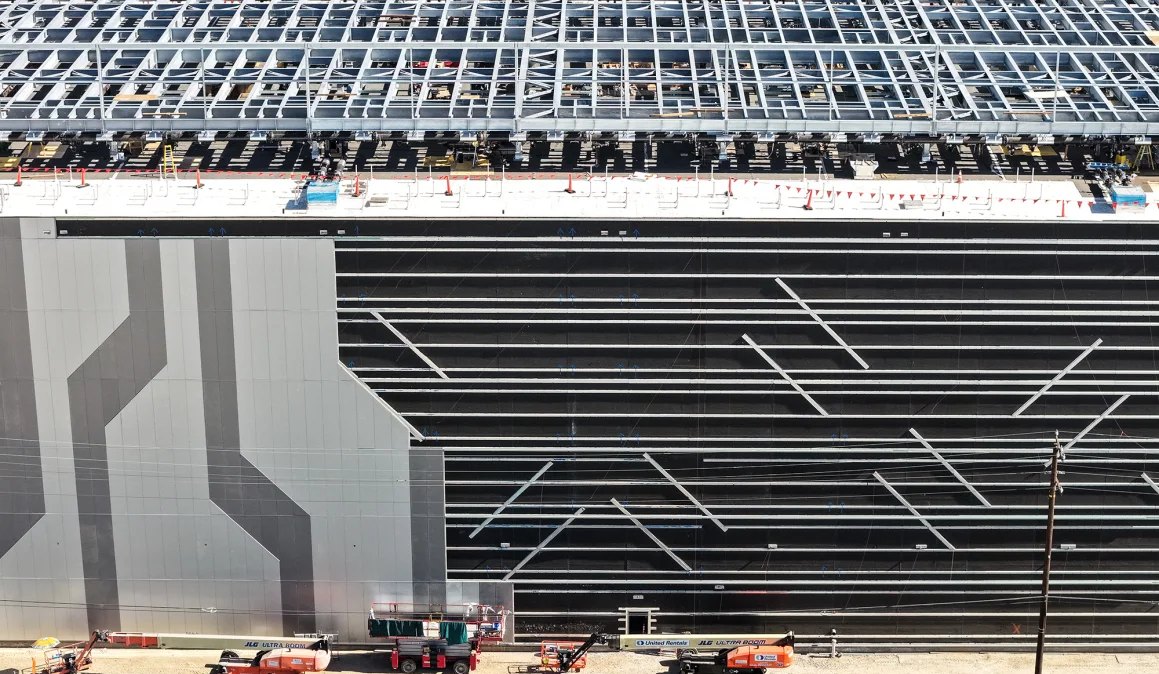
Before the building can cool itself, a data center site is ordinary heavy construction in a hot region: steel erection and roof deck work in full sun, electrical rough-in and busway at pace, and mechanical trades inside an enclosed shell with no cooling plant running yet. The difference is the schedule, which is paced by equipment delivery dates rather than by weather, so heat-driven stand-downs land directly on a critical path with a contracted go-live at the end of it. Crews need the same hierarchy as any site, water, shade and rest first, plus cooling that lasts a full shift rather than the hour or two ice and phase-change gear manage.
How hot does a data center hot aisle get?
Hotter than the numbers most people quote, because the familiar figures are inlet temperatures. ASHRAE's thermal guidelines set a recommended server inlet range of 64.4 to 80.6°F, with allowable inlet ranges running to 89.6°F for Class A1 equipment and as high as 113°F for Class A4. That is the air going into the rack. The hot aisle is what comes back out after it has passed over the servers, so it sits above the inlet figure by the temperature rise across the equipment. A crew pulling cable or swapping drives in that aisle is standing in the exhaust.
Is a data center air conditioned for the workers?
No. A data hall is precision climate-controlled for the equipment, and the design intent is to keep cold air at the server inlets and move waste heat away from them efficiently. Containment does that by keeping the hot air separated and concentrated, which is good for the machines and worse for anyone standing on the hot side of the containment. The building is a cooling system that is not pointed at people.
Why do ice and evaporative cooling vests fail in a data hall?
Because both of them bring water into a live electrical room. Ice vests melt and produce condensation and meltwater. Evaporative vests have to be soaked to work and are wet by design. Neither is something a facility team wants near energized racks, busway or switchgear, and both also run out fast: ice fades in about one to two hours and phase-change packs need a freezer that a data hall does not have. Solid-state cooling runs dry, which is the reason it fits this environment.
Does OSHA's heat program apply to data center construction?
Yes. OSHA renewed its National Emphasis Program on heat on 10 April 2026 for up to five years, covering 55 target industries including construction specialty trades. There is still no federal heat standard in force, so heat is cited under the General Duty Clause, but a heat priority day is triggered by a forecast heat index of 80°F or above and inspections follow. Several states with heavy data center build-out, including California, also enforce their own heat rules.
What cooling vest works for electricians in a data center?
One that runs dry, fits under a hi-vis vest and lasts the full shift rather than an hour. Clema is a sub-3-lb solid-state system that makes cold electrically instead of carrying a store of it, so there is no ice, no meltwater and no re-soaking, and it runs 8 to 12 hours on one battery swap. Note the honest limit: Clema is not rated for use under flame-resistant or arc-rated garments, so it is not the answer for arc-flash PPE tasks.
How big is data center construction right now?
US private data center construction was running at a seasonally adjusted annual rate of about $50.7 billion in April 2026, up roughly 28% year over year, and it now exceeds conventional office construction. The Census Bureau only began breaking data centers out as their own line in mid-2024. That scale matters for heat because these are large-footprint sites, often on open ground in hot regions, built to schedules set by equipment delivery dates rather than by weather.