Best Cooling Vests for Workers: A 2026 Guide by Job Type

The short answer: there is no single best cooling vest, and every list that crowns one is an affiliate page wearing a lab coat. Three variables decide this, and none of them appear on the front of a product page: how many hours the vest has to keep working, how humid your site gets, and what PPE it has to fit underneath. Get those right and the category picks itself. Get them wrong and you have bought a vest that tests beautifully and lives in a locker by the second week of August.
September 2026 update: this guide now separates catalog claims from jobsite fit. Before ranking any vest, test it with the crew's actual PPE, confirm runtime under the temperatures you expect, and check both fit and sizing and humidity performance. Those two screens eliminate more bad options than brand comparisons do.
Key takeaways:
- Shift length is the first filter. Passive vests (ice, PCM, evaporative) cover one to three hours. Nothing changes that.
- Humidity is the second. Evaporative cooling is a weather bet. Ice, PCM, and active cooling are not.
- PPE layering is the third, and it is the one that decides adoption. A vest that gets in the way of a harness gets taken off.
- Fit is not a comfort issue, it is a performance issue. Cooling only transfers where the vest touches you.
The four types of cooling vests, in one table
Every worker cooling vest sold today is one of four things. There is enormous variation in branding and almost none in physics, which is why category matters more than brand and why most buyers get this decision backwards.
| Type | How it cools | Realistic runtime | Humidity | Reset needed |
|---|---|---|---|---|
| Ice / gel | Frozen packs absorb heat as they thaw | 1 to 2 hrs | Unaffected | Freezer plus spare packs |
| Phase-change (PCM) | Packs melt at a set temperature | 1.5 to 3 hrs | Unaffected | Ice water or freezer |
| Evaporative | Water evaporates off soaked fabric | 2 to 4 hrs (dry air only) | Fails in humidity | Re-soak in water |
| Active (battery) | Cooling generated electrically, continuously | Full shift on a battery swap | Unaffected | Charged battery |
For the mechanism behind each one, see how a cooling vest works. For measured runtime numbers, see how long a cooling vest lasts, and for the head-to-head, the full cooling vest comparison.
Best cooling vest for construction workers
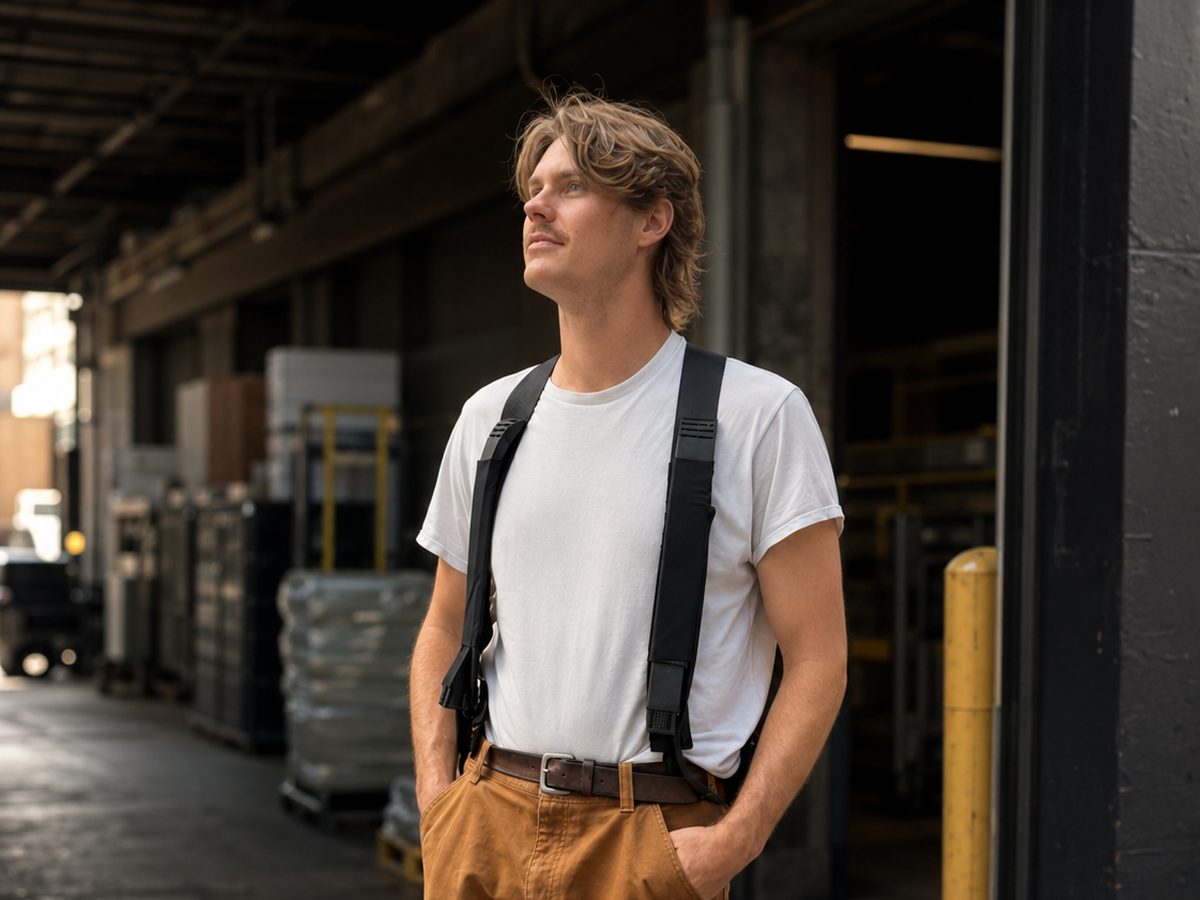
Construction is the hardest case, because it stacks every constraint at once: eight to twelve hour shifts, direct sun, radiant heat off concrete and steel, and a PPE layer that is not negotiable. Hi-vis over flame-resistant clothing over a fall-arrest harness leaves very little room for anything bulky.
What to buy: an active battery-powered vest if the shift runs past mid-afternoon, because it is the only category that does not quit before the hottest hours. Phase-change is a defensible lower-cost choice for shorter shifts, shaded work, or crews that can reliably swap packs at a scheduled break. Skip evaporative unless you are in genuinely dry heat, and even then expect to re-soak.
What actually decides it: whether the vest works with the harness. A cooling layer worn over a harness interferes with the harness, and a cooling layer that adds bulk at the shoulders gets removed within a week regardless of how well it cools. Check this before you check any thermal spec. More on the sector in our construction heat stress guide.
Best cooling vest for warehouse and logistics work
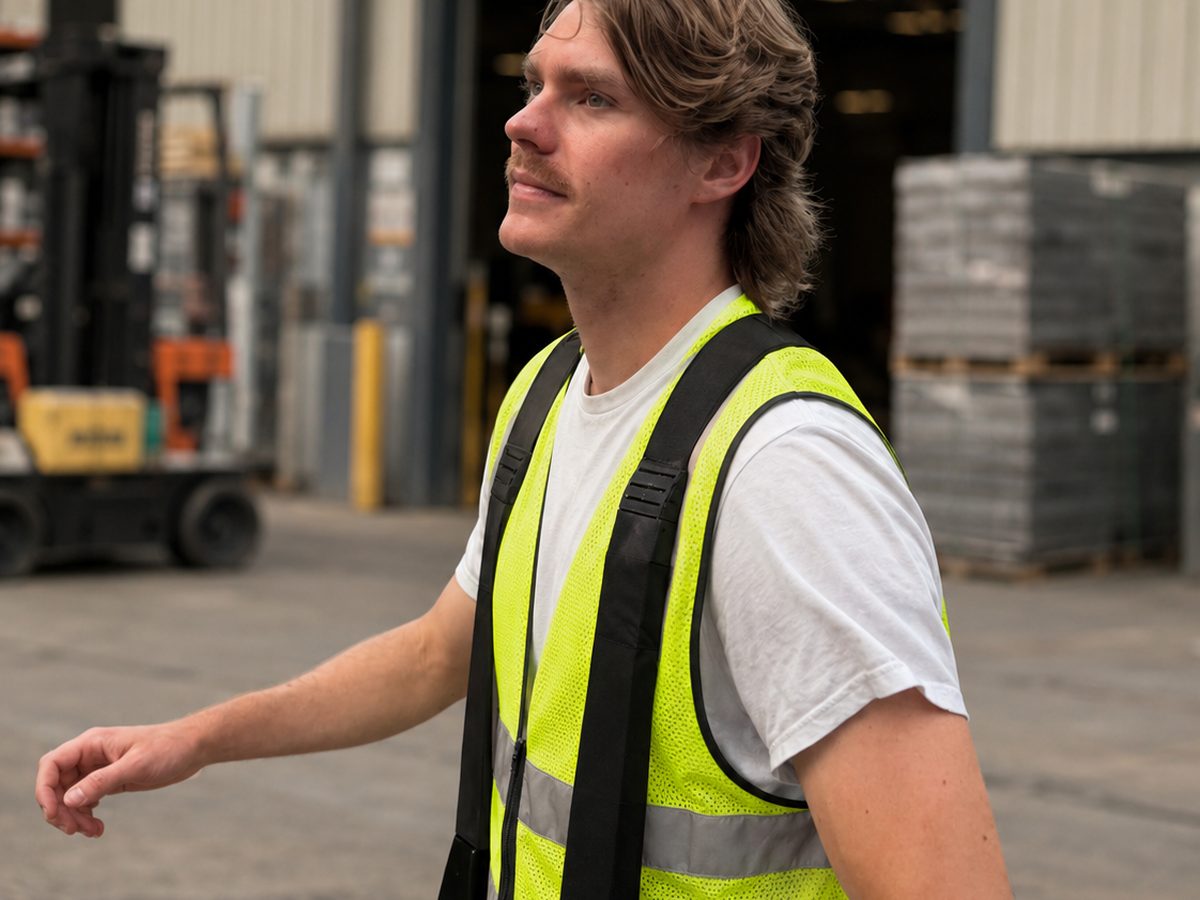
Warehouses are where this industry is most wrong. No sun means the risk reads as lower, so warehouse heat gets budgeted like an HVAC complaint rather than a hazard. In reality a non-climate-controlled distribution center in July runs hotter than the air outside, stays hot after dark because the slab and steel hold heat overnight, and never gets the overnight reset an outdoor site does. Add continuous lifting and walking and the metabolic load beats a lot of outdoor work.
What to buy: active cooling for full shifts, PCM for shorter ones. The important variable here is weight and range of motion, not raw cooling power, because the work involves continuous lifting, reaching, and walking. Anything heavy enough to notice becomes a fatigue source of its own.
What actually decides it: reset logistics. Warehouses rarely have freezer capacity to spare for vest packs, which quietly rules out ice and complicates PCM at scale. A battery charging rack is a much easier ask than freezer space. See the logistics heat page for more.
Best cooling vest for military and tactical use
Military and tactical wear adds two constraints civilians do not have: the cooling layer usually goes under body armor or a plate carrier, and the whole assembly has to survive being worn for extended periods without maintenance access. Signature, noise, and snag hazards matter too.
What to buy: low-profile active cooling, if the mission length exceeds a couple of hours. Under armor, the trapped microclimate is the entire problem, and passive packs saturate quickly in that environment because there is nowhere for the absorbed heat to go once the pack warms.
What actually decides it: profile and durability rather than peak cooling. A thin vest that survives the environment beats a more powerful one that cannot be worn under the carrier. See the military cooling page.
Best cooling vest for manufacturing and plant floors
Indoor process heat is a different animal from weather heat. Furnaces, ovens, presses, and dryers create radiant loads that can push the effective temperature far above what the thermostat on the wall says, and the heat is often concentrated in specific zones rather than spread across the floor.
What to buy: active cooling for anyone working a hot zone for a full shift. For workers who pass through hot zones intermittently, PCM can be adequate, since the pack gets a chance to recover between exposures.
What actually decides it: mapping. Measure wet bulb globe temperature at the workstations rather than at the building level, because plant-average numbers hide the zones where people actually get hurt. We covered this in why manufacturing floors are getting hotter, and the sector detail lives on the manufacturing page.
Fit: the spec nobody publishes
Here is the industry's least examined failure. Most industrial cooling vests are sold as unisex, which in practice means cut for a broad male torso, and the whole field has agreed to file this under comfort. It is not a comfort issue. It is a thermal one.
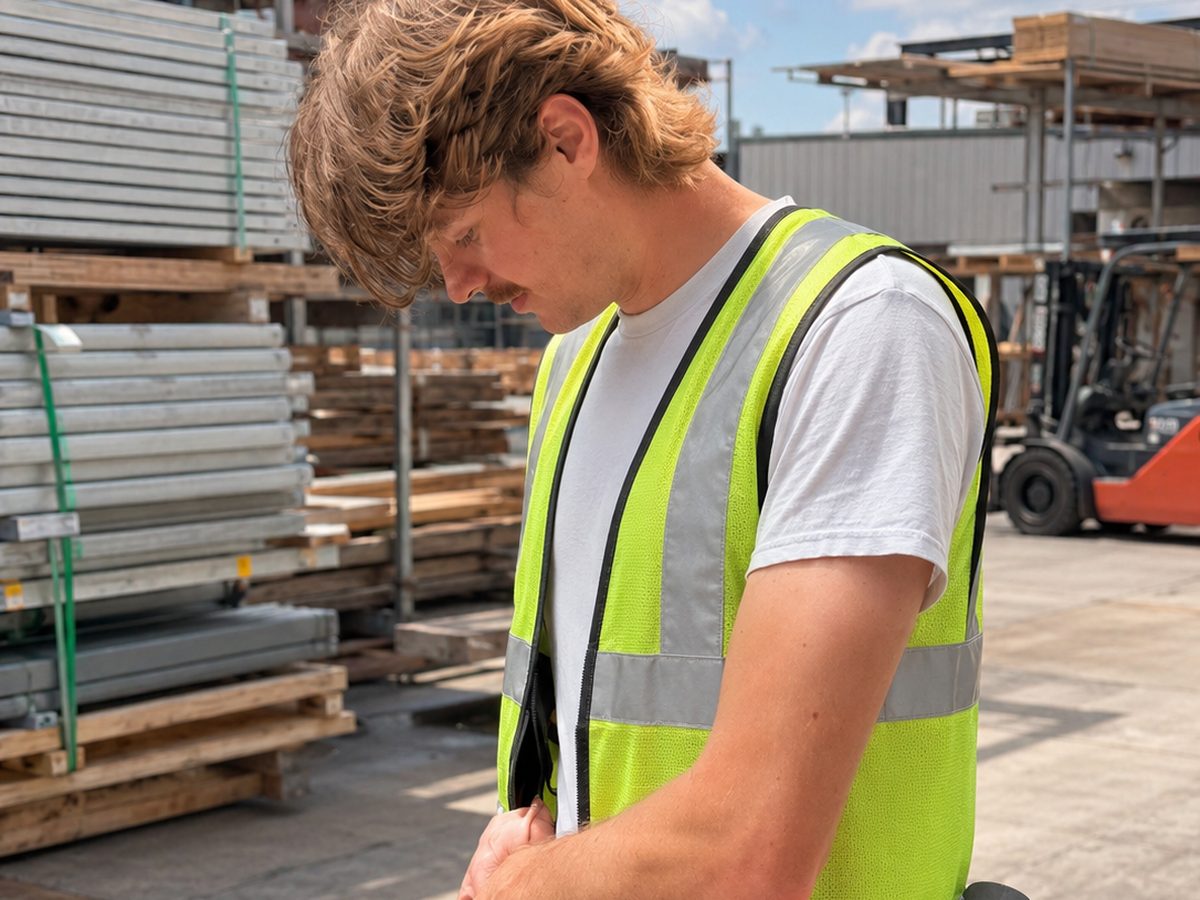
Cooling transfers by contact. Wherever the vest is not touching the body, it is not cooling anything, it is carrying weight. A vest that gaps at the chest or rides up at the waist is not slightly less effective, it is effective across less surface area, and no amount of cooling capacity fixes a contact problem. That means the same vest can deliver its rated performance on one worker and a fraction of it on the person standing next to them, with nothing in the spec sheet to warn you.
The consequence is predictable and rarely traced back to its cause: the workers who get the least benefit are the ones who stop wearing it first, and their crews get logged as low-adoption rather than poorly fitted.
Two practical checks before you commit to a size run:
- Test the extremes, not the average. Fit the smallest and largest people on the crew. If the cooling surface lifts off the torso on either, the size range is wrong.
- Check adjustability at the sides and shoulders, and confirm it still holds after an hour of movement. Straps that need constant readjustment predict a vest that stops being worn.
If a vendor cannot tell you how the cooling surface is positioned across their size range, that is an answer.
The four specs worth comparing
Once the category is settled, four numbers separate products inside it. Everything else on the spec sheet is there to fill the spec sheet. Peak cooling output in particular is the number vendors lead with and the one that predicts field performance worst, because it describes minute one of a ten-hour problem.
- Runtime per reset, and how the reset works. Hot-swap batteries beat charging in place. A freezer requirement is a hidden facility cost.
- Total weight including the battery. Published weights sometimes exclude it. Under about two pounds is the practical ceiling for all-day wear.
- Where it sits in the PPE stack. Under existing layers, or competing with them.
- Rated conditions. A cooling figure measured in dry lab air tells you very little about a humid August afternoon. Ask what humidity the number was measured at.
We go deeper on the selection framework in how to choose a cooling vest for your crew, and on what the peer-reviewed literature actually supports in do wearable cooling devices actually work.
Where we fit, stated plainly
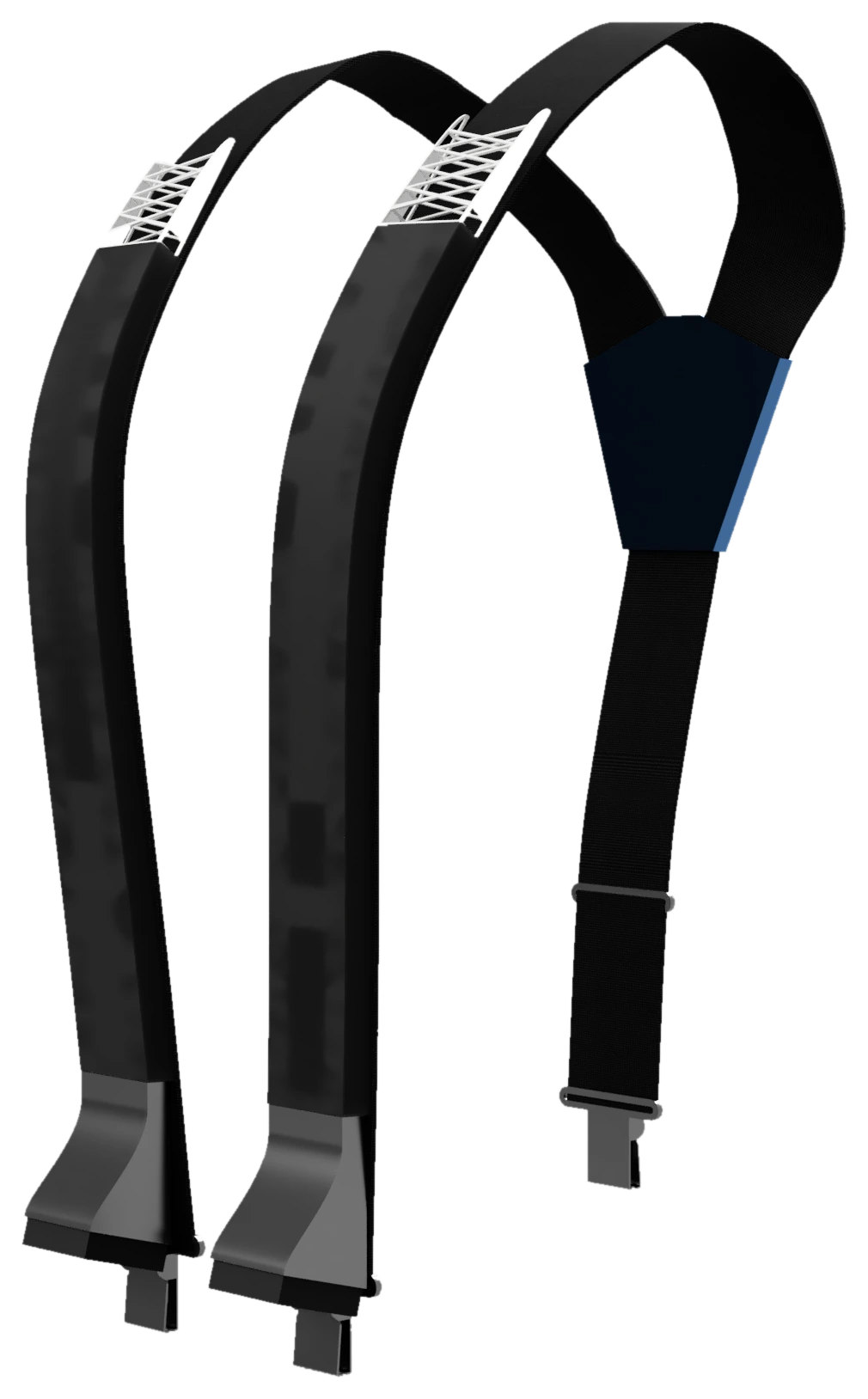
We build Clema, a solid-state active cooling vest designed to run a full shift on a battery swap and to sit under existing PPE. It is in the active category described above, and it is pre-launch: the first batch sold out, and a limited 2027 deployment is being allocated.

We are telling you that here, at the bottom, instead of at the top of a numbered list, because a buying guide that ranks its author first is not a buying guide. We would rather you buy the right category than buy from us. If we cannot win on runtime, humidity independence, and whether the thing fits under a harness, we should not win.
If your shifts are short, your climate is dry, or your budget is tight, a PCM or evaporative vest may genuinely be the right call, and the comparison page lays out where each one wins. If you want to size the cost of the heat itself before you spend anything on gear, the heat-stress ROI calculator is the place to start. And whatever you buy, it sits alongside water, shade, rest cycles, and an acclimatization schedule rather than replacing them, which is the point of the six heat illness prevention practices and increasingly a compliance expectation under OSHA's updated heat enforcement program.
Frequently asked questions
What is the best cooling vest for construction workers?
What are the four types of cooling vests?
Is there a difference between cooling vests for men and women?
What is the best battery-powered cooling vest?
Do cooling vests work in high humidity?
Compare every cooling vest type → and see the battery-powered cooling vest guide →