WBGT for work: the limits, work/rest and how to measure it.

Take a 90°F day with a 92°F heat index. Under clear sky and a 3 mph breeze, the National Weather Service puts the WBGT at 89°F, over every limit on this page. A 13 mph wind drops it to 83°F.

Wet bulb globe temperature (WBGT) is the number work heat limits are written in, because it adds wind and radiant heat to temperature and humidity. OSHA's NIOSH-based limits for acclimatized workers run from 30°C (86°F) for light work to 25°C (77°F) for very heavy work, and 2 to 4°C lower for anyone new to the heat.

30°C · 86°FLight work, acclimatized
25°C · 77°FVery heavy work, acclimatized
21°C · 69.8°FVery heavy work, new to the heat

What does WBGT measure?

A WBGT meter blends three thermometers, described in the OSHA Technical Manual. The wet bulb carries 70% of the score, so a muggy, still day reads far worse than a dry, breezy one at the same temperature.

What goes into WBGT

Outdoors, in sun

WBGT = 0.7 Tnwb + 0.2 Tg + 0.1 Tdb

Indoors, no sun

WBGT = 0.7 Tnwb + 0.3 Tg

  • Natural wet bulbHumidity and wind
  • Black globeSun and hot surfaces
  • Dry bulbAir temperature

What goes into the heat index

  • Air temperature
  • Humidity
  • Wind
  • Sun and radiant heat
  • Workload

Calculated for shade. Direct sun can add up to 13.5°F (OSHA).

Formulas: OSHA Technical Manual. Terms: glossary.
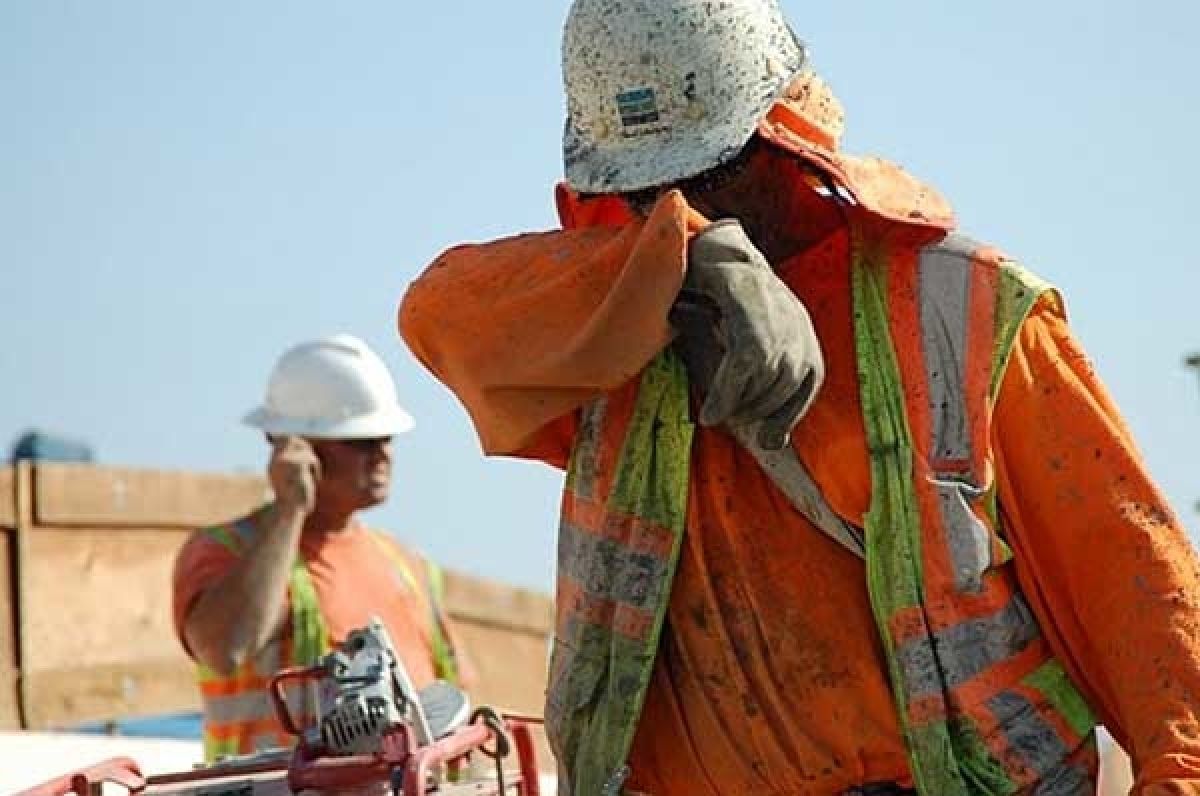
Construction worker in an orange shirt and hi-vis vest wiping sweat from his face in full sun, with a coworker in a white hard hat behind him
Sun, hard work, hi-vis. WBGT counts all three. The heat index counts none.
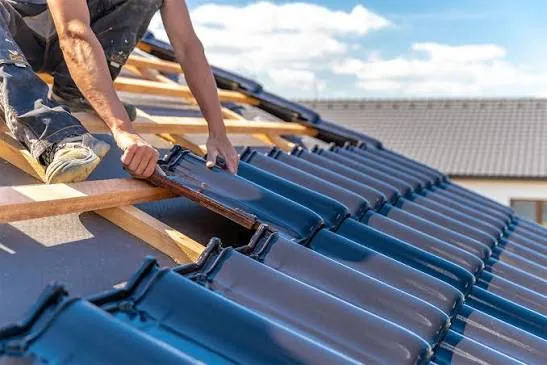
Roofer's hands setting dark blue clay tiles onto wooden battens on a sunny roof
On a sunny roof the two numbers split furthest.

WBGT vs heat index: which should you use?

Plan the day with the heat index (OSHA's bands are on the break chart). Decide whether the work is safe with WBGT.

OSHA says the heat index is less accurate for worksites because it ignores wind, sun, radiant heat and workload. Outdoor workers have died of heat stroke on days it peaked at only 86°F.

Same heat index, different WBGT

Wind and cloud move the WBGT. The heat index doesn't budge.

Heat indexWBGT
90°F, 42% humidity5% cloud, 3 mph wind
89°92°
90°F, 42% humidity5% cloud, 13 mph wind
83°92°
90°F, 42% humidity65% cloud, 13 mph wind
81°92°
90°F, 52% humidity10% cloud, 6 mph wind
88°96°
100°F, 39% humidity10% cloud, 5 mph wind
94°108°
100°F, 39% humidity10% cloud, 13 mph wind
90°108°
80°F85°F90°F95°F100°F105°F110°F
See the numbers as a table
Air tempDew pointHumiditySky coverWindHeat indexWBGT
90°F65°F42%5%3 mph92°F89°F
90°F65°F42%5%13 mph92°F83°F
90°F65°F42%65%13 mph92°F81°F
90°F70°F52%10%6 mph96°F88°F
100°F70°F39%10%5 mph108°F94°F
100°F70°F39%10%13 mph108°F90°F

Source: NWS Wichita, WBGT vs Heat Index. WBGT computed for direct sun unless cloudy.

WBGT runs lower than the heat index, so it can look less risky (NWS). But an 88°F WBGT is over every limit below, while an 88°F heat index sits in OSHA's lowest band.

What are the NIOSH WBGT limits by workload?

Harder work, lower limit, and less room again for anyone new to the heat. NIOSH's 2016 criteria set an alert limit (RAL) for unacclimatized workers and an exposure limit (REL) for acclimatized ones: one-hour averages for healthy workers in normal work clothes.

WBGT limit by workload

New to the heat (alert limit)Acclimatized (exposure limit)
Light180 WStanding watch, driving, slow walking
28°C (82.4°F)
30°C (86°F)
Moderate300 WHammering nails, operating mobile equipment, general carpentry
25°C (77°F)
28°C (82.4°F)
Heavy415 WCarrying loads, shoveling, roofing, welding, mixing cement
23°C (73.4°F)
26°C (78.8°F)
Very heavy520 WClimbing ladders or stairs, intense digging, brick masonry
21°C (69.8°F)
25°C (77°F)

Source: OSHA, Heat Hazard Recognition (70 kg worker). Bars start at 15°C. Compare after any clothing adjustment.

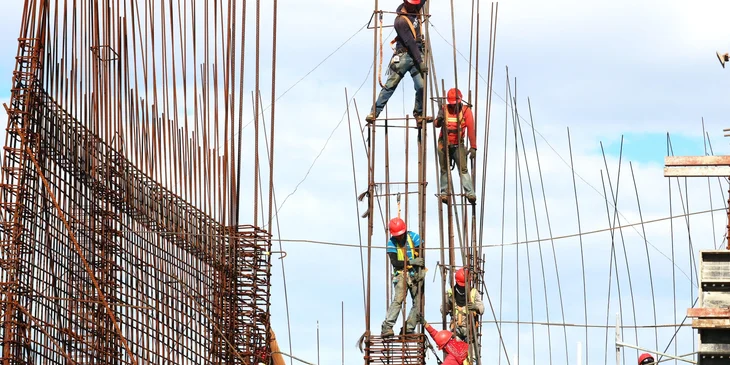
Ironworkers in hard hats climbing and working on tall rebar cages against a blue sky
OSHA lists climbing ladders or stairs as very heavy work, the row with the lowest limits.

Two rules of thumb

  • Not sure how hard the job is? OSHA says assume the higher workload.
  • On the job less than one to two weeks? Treat them as unacclimatized.
The NIOSH equations behind the chart
RAL (°C WBGT) = 59.9 − 14.1 log10 M
REL (°C WBGT) = 56.7 − 11.5 log10 M

M is metabolic rate in watts. At 300 W they give about 25.0°C and 28.2°C, the moderate row. ACGIH's Action Limit and TLV follow the same idea, aiming to keep core temperature within 1°C of normal.

How do WBGT limits turn into a work/rest schedule?

The limits assume a full hour at one workload. Shorter work periods allow more heat, but there's no free table to copy, so work from the hourly average.

01

Average the hour

Moving between hot and cool areas? Average by time (OSHA):

WBGTavg = (WBGT1×t1 + WBGT2×t2 + …) / (t1 + t2 + …)

Average over 60 minutes (60 to 120 if exposure is intermittent). Rest in the same heat barely moves it.

02

Check it against the limit

Enter WBGT, workload, acclimatization and clothing into OSHA's Heat Stress Calculator to see if you're over.

03

Act on two readings

Two hourly readings in a row over the limit? NIOSH says change the work until two in a row are back under.

Why there's no work/rest table to copy

ACGIH's TLV table (100%, 75%, 50% and 25% work per hour) is copyrighted and not public, per the OSHA Technical Manual, and NIOSH's 60, 45, 30 and 15 minute curves are graphs only. For a task-specific schedule, bring in an industrial hygienist. The heat index version is on the break chart.

Clothing adds heat before anyone lifts a thing

Add the factor to the measured WBGT, then compare. For impermeable suits, NIOSH prefers dry bulb or adjusted dry bulb.

Worked example

Moderate work, polyolefin coveralls, meter averaging 27°C (80.6°F).

27°Cmeasured
+
1°Ccoveralls
=
28°Ceffective (82.4°F)

Right at the acclimatized limit, and 3°C over for anyone in their first week or two.

Add to the measured WBGT

Work clothing (baseline)

0

Cloth coveralls

0

SMS (spunbond melt-blown) polypropylene coveralls

+0.5°C (0.9°F)

Polyolefin coveralls

+1°C (1.8°F)

Double-layer cloth clothing

+3°C (5.4°F)

Limited-use vapor-barrier coveralls

+11°C (19.8°F)

Sources: OSHA, Heat Hazard Recognition; NIOSH 2016-106, Table 3-2.

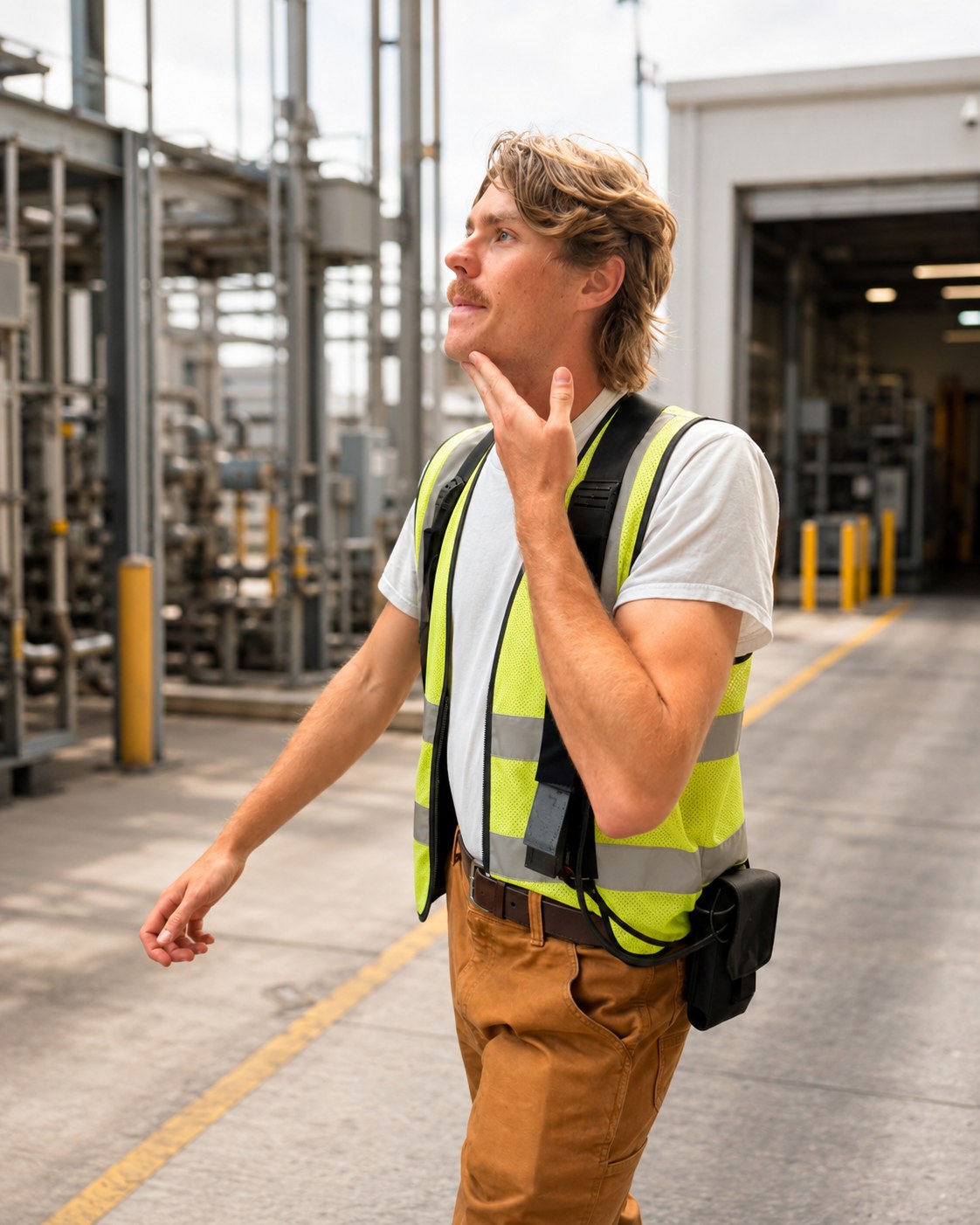
Worker wearing a Clema cooling vest under a hi-vis safety vest, walking past equipment at an industrial site
A Clema cooling vest worn under hi-vis.

Where cooling vests fit. They don't change the limit; no factor subtracts for them. But NIOSH says employers should provide cooling garments when heat stress exceeds the limits, and that they may let people work longer.

Clema is one option: solid-state cooling under PPE, no ice or water, 8 to 12 hours with one battery swap. See the comparison.

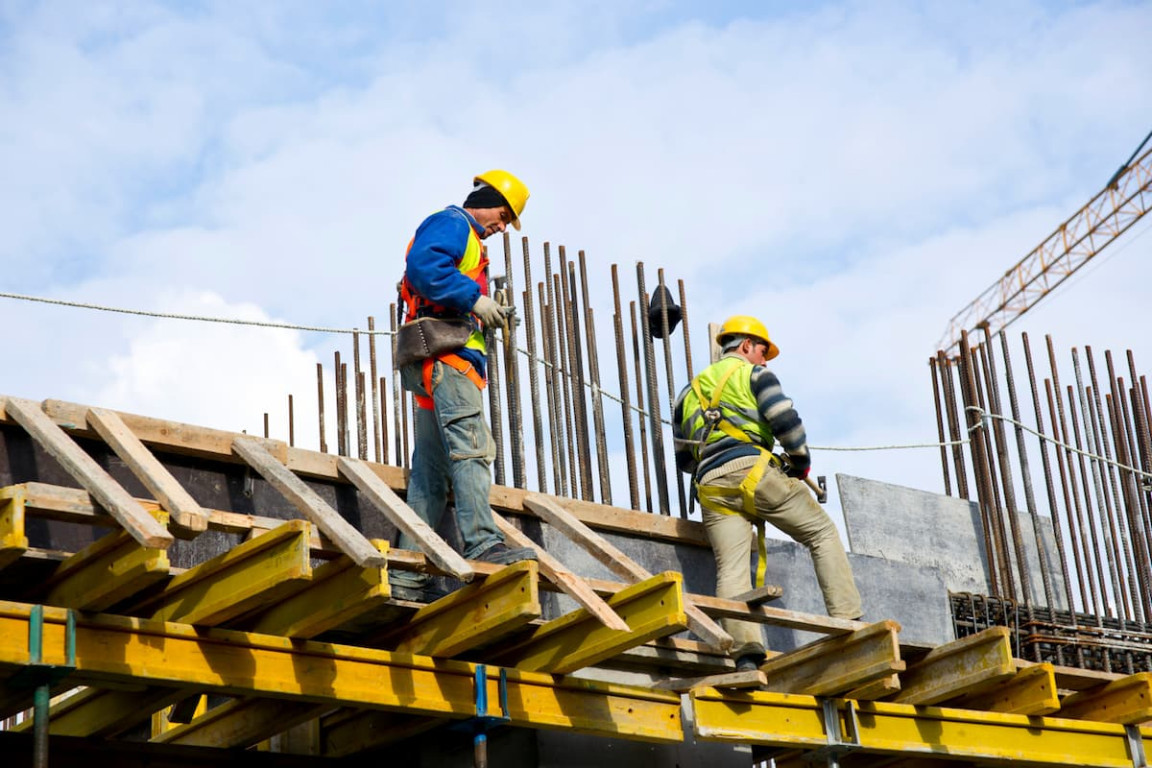
Two construction workers in hard hats on a timber formwork deck under open sky, next to vertical rebar and a crane
Open deck, full sun. The meter belongs up here.

How do you measure WBGT at a worksite?

Where the work is. If your crew is in the sun, the meter goes in the sun.

  • Wick or waterless. OSHA calls waterless meters a validated alternative.
  • Let the globe settle. 15 to 20 minutes for a standard 6-inch globe, about 5 for a 4.2 cm one (NIOSH).
  • Read hourly and log it through the hottest part of the shift.

Do

  • Put the meter in the same sun, wind and radiant heat as the crew.
  • Measure each area people move between.
  • Plan heavy tasks with the NWS WBGT forecast (digital.weather.gov).

Don't

  • Take the reading in the shade while the crew works in full sun.
  • Read the meter before the globe has settled.
  • Make the go or no-go call from a forecast or Argonne's estimator. OSHA notes their error grows with distance.
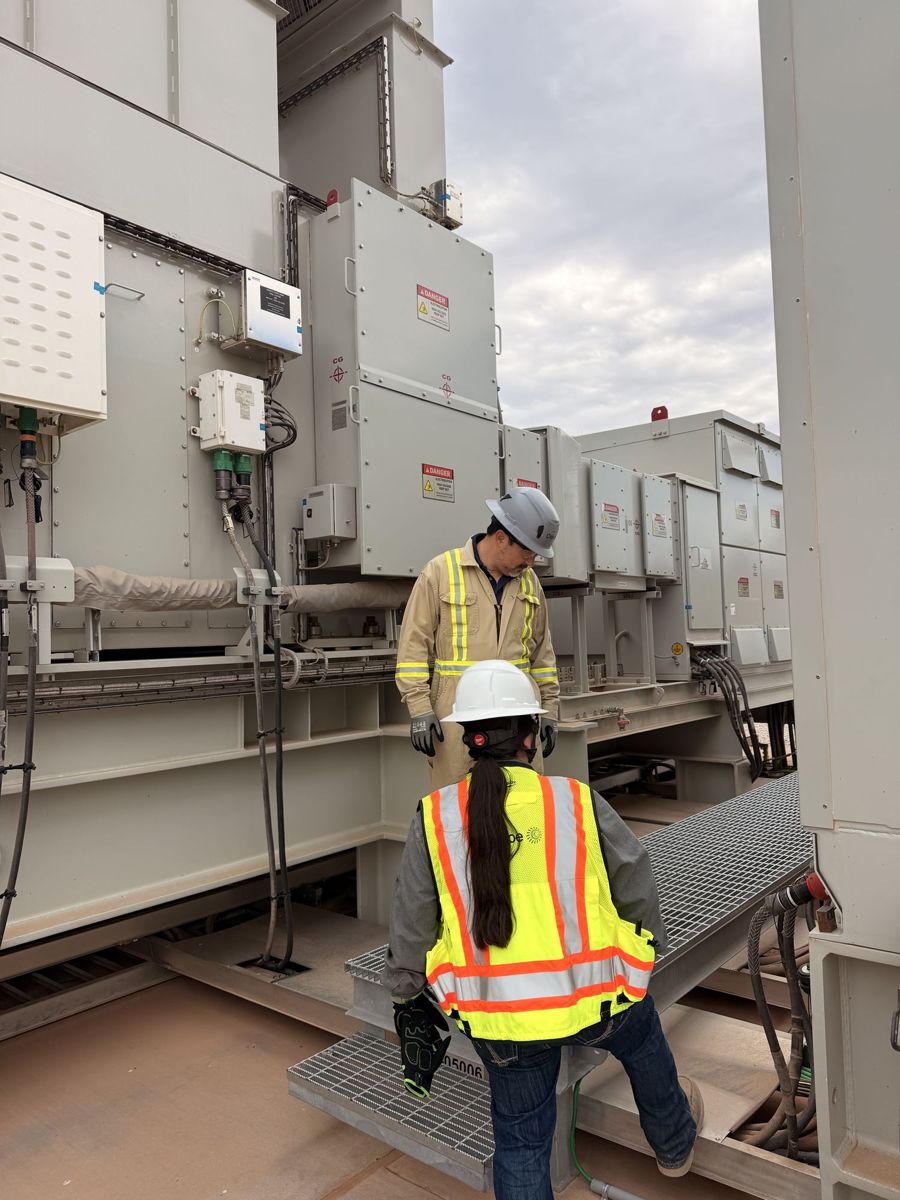
Two workers in hard hats and hi-vis vests on a metal walkway between large equipment cabinets at a power plant
Around plant equipment, radiant heat from hot surfaces shows up only on the globe thermometer.

Where is WBGT written into heat rules?

  • Minnesota. Enforceable indoor limits, as a two-hour average for acclimatized workers (5205.0110): 86°F light, 80°F moderate, 77°F heavy.
  • Federal proposal. OSHA's 2024 proposal triggers at a heat index of 80°F or the NIOSH RAL, and high heat at 90°F or the REL. Not final (status).
  • Inspections. OSHA's Technical Manual prepares inspectors to measure WBGT, add the clothing factor and compare with ACGIH limits.

Whoever runs the meter needs training: see the heat stress training guide. Heat near these limits also costs output.

WBGT, answered.

What is a safe WBGT for outdoor work?
It depends on how hard the work is and whether the worker is acclimatized. OSHA's table, adapted from NIOSH, sets the limit for acclimatized workers at 30°C (86°F) WBGT for light work, 28°C (82.4°F) for moderate, 26°C (78.8°F) for heavy and 25°C (77°F) for very heavy work. For unacclimatized workers the limits are 28°C (82.4°F), 25°C (77°F), 23°C (73.4°F) and 21°C (69.8°F). Add a clothing adjustment for coveralls or vapor barriers to the measured WBGT before comparing.
Can you convert heat index to WBGT?
Not reliably. In National Weather Service examples, a 92°F heat index lines up with a WBGT anywhere from 81°F to 89°F depending on sun and wind. WBGT numbers also typically run lower than heat index numbers, so never apply heat index thresholds to a WBGT reading.
Does OSHA require WBGT monitoring?
No federal OSHA heat standard is in force, so there is no federal WBGT requirement today. OSHA recommends WBGT for measuring workplace heat, Minnesota's indoor rule sets enforceable WBGT limits, and the proposed federal rule would let employers use either a heat index or a WBGT trigger.
How often should WBGT be measured on a jobsite?
NIOSH recommends at least hourly during the hottest part of each shift, during the hottest months, and whenever a heat wave occurs or is forecast. If two hourly readings in a row exceed the limit, change the work until two readings in a row are back under it.
Where is the ACGIH TLV work/rest table?
In ACGIH's own TLV publication. It gives WBGT limits for 100%, 75%, 50% and 25% work in each hour, but it is copyrighted, and OSHA's Technical Manual notes it is not publicly available. OSHA's free Heat Stress Calculator and NIOSH-based limits table are the public alternatives.
Do cooling vests change the WBGT limit?
No. The published clothing adjustments only add heat; none subtracts for cooling garments. NIOSH lists water-cooled garments, air-cooled garments and ice-packet vests among the equipment employers should provide when heat stress exceeds its limits, and notes cooling vests may let workers work longer. Treat one as a control on top of water, rest, shade and acclimatization.

Keep reading.

Cooling for the hours the WBGT won't drop.

Early AccessROI calculator